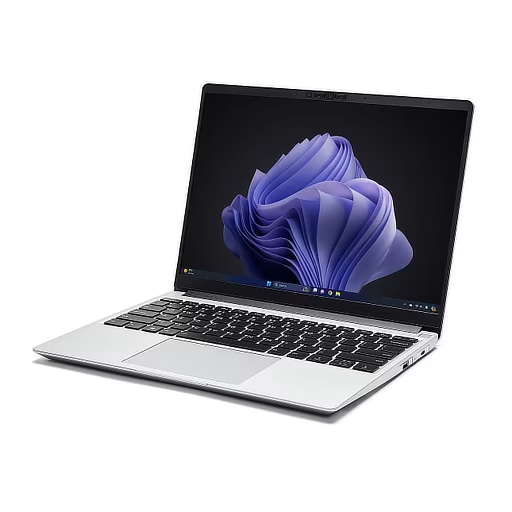
Framework Laptop 13
The core product; a 13.5-inch ultrabook available in aluminum. It is notable for its "Expansion Card" system, allowing users to hot-swap ports (USB-C, HDMI, SD Card) on the side of the machine without dongles.
Justification Needed
Framework Computer Inc. is a consumer electronics company founded by Nirav Patel (formerly of Oculus and Apple). They are attempting to reverse the industry trend of sealed, disposable electronics by producing high-performance laptops that are 100% modular. They are most-known for the Framework Laptop 13 and 16, which feature user-replaceable ports ("Expansion Cards"), batteries, screens, and even mainboards.
Founded by Nirav Patel in San Francisco, CA.
Launch of the Framework Laptop 13 (11th Gen Intel). First perfectly repairable ultrabook.
Released Mainboard Upgrade Kits (12th Gen Intel), proving the upgrade promise was real.
Expanded manufacturing partnership with Compal in Taoyuan, Taiwan.
Launch of the Framework Laptop 16 with modular graphics (GPU).
Introduction of the Framework Laptop 12 (2-in-1 tablet) and Framework Desktop chassis.
Returns: 30 Days from the date of shipment (not delivery). Items must be in like-new condition. Logistics: Returns are generally free (pre-paid label provided) for defect-free items, but original shipping fees are non-refundable.
Framework is listed because they are the only company that allows users to upgrade the CPU/Mainboard without discarding the chassis. Unlike what you typically see in the industry, where RAM and SSDs are soldered to the board, Framework makes every component accessible. Their Mainboard Upgrade program effectively turns a laptop chassis into a lifetime investment rather than a disposable consumable.
The core product; a 13.5-inch ultrabook available in aluminum. It is notable for its "Expansion Card" system, allowing users to hot-swap ports (USB-C, HDMI, SD Card) on the side of the machine without dongles.
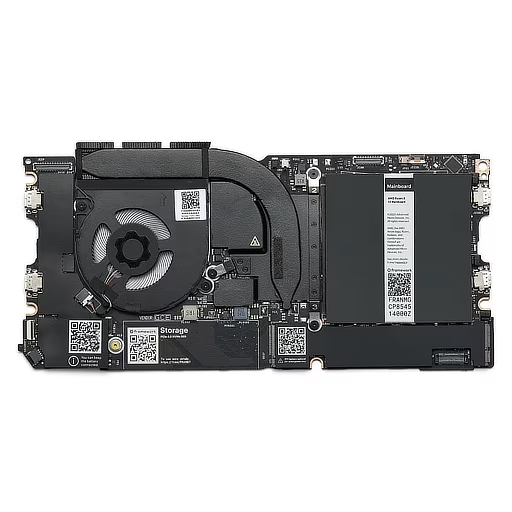
The heart of their ecosystem. Framework sells standalone motherboards containing newer CPUs (Intel Core Ultra, AMD Ryzen) that fit into older chassis, allowing users to modernize their laptop instead of buying a new laptop.
Battery Drain: Users frequently report higher-than-average battery drain while the laptop is in sleep/standby mode, particularly when specific Expansion Cards (HDMI or DisplayPort) are left slotted in. While firmware updates have improved this, "lid-closed" battery life generally lags behind Apple Silicon MacBooks.
Chassis Rigidity: To facilitate easy opening (magnetically attached bezels), the chassis lacks the structural rigidity of a unibody design. The Framework Laptop 16 in particular has received criticism for keyboard deck flex and screen wobble.
The "DIY" Risk: While marketed as simple, internal connectors (especially the delicate WiFi antenna cables and display ribbon) require fine motor skills. Damage caused during self-repair is generally not covered under warranty unless the part itself was defective.
Manufacturing: Framework designs in San Francisco but utilizes Compal Electronics in Taoyuan, Taiwan for final assembly.
* Taiwan: Final assembly, mainboard production, and direct-to-consumer fulfillment center. * China: Components and sub-assemblies (batteries, raw aluminum chassis).