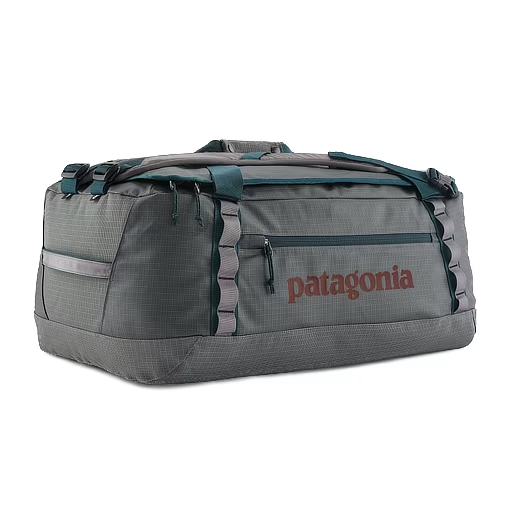
Black Hole Duffel
The standard for travel durability; made from heavy-duty recycled polyester ripstop with a TPU-film laminate, notable for its ease of repair (patches/straps) compared to hard luggage.
A leader in ethical mass-production and repair support, though buyers must navigate specific product lifespan realities (wetsuits/laminates) and return fees.
Patagonia is the foremost American outdoor apparel company, recognized for pioneering the "anti-consumerist" corporate model. While they market heavily on sustainability, they are operationally a design and logistics firm; they do not own their manufacturing factories. They are best known for synthetic fleece (Synchilla), technical insulation (Nano Puff), and their comprehensive "Ironclad Guarantee" which effectively subsidizes long-term ownership.
Founded by Yvon Chouinard in Ventura, CA (spun off from Chouinard Equipment).
Introduction of Synchilla fleece (replacing wool/polypropylene).
First outdoor brand to make fleece from recycled plastic bottles.
"Don't Buy This Jacket" ad campaign runs in the NYT (Black Friday).
Worn Wear program formally launched to facilitate repair and resale.
Chouinard transfers ownership to the Patagonia Purpose Trust (all profits go to climate action).
Returns: No time limit for returns, but items returned after 1 year or without proof of purchase receive Merchandise Credit at the last known sale price. Logistics: US returns incur a $7.00 shipping fee (waived for exchanges). EU/UK returns are typically free via prepaid label.
Patagonia is listed because they operationalize longevity better than any other mass-market brand. Their Worn Wear program provides an official channel for repair and resale, and their warranty department performs functional repairs (zipper replacement, patching) that most competitors would reject as "wear and tear." They are the safe default for durable outdoor goods.
The standard for travel durability; made from heavy-duty recycled polyester ripstop with a TPU-film laminate, notable for its ease of repair (patches/straps) compared to hard luggage.
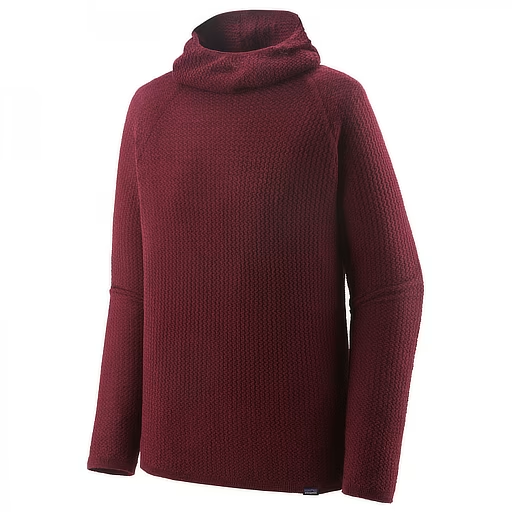
A unique merino wool/polyester blend that solves the durability issues of 100% merino (holes/tearing) while maintaining odor resistance.
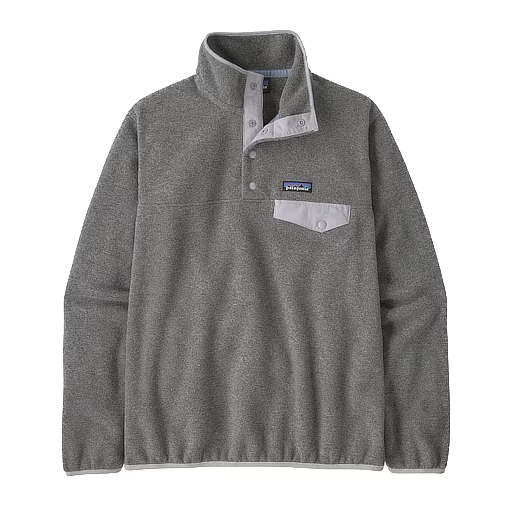
The archetype of the modern fleece; thick, double-faced recycled polyester that is virtually indestructible, though current production (Central America) fits boxier than vintage versions.
Waterproof Laminate Failures: The "H2No" waterproof coating on rain shells (Torrentshell, Triolet) is prone to delamination (peeling/flaking) after 5-8 years. This is a chemical inevitability of polyurethane coatings. While often replaced under warranty, claims on 10+ year old jackets are increasingly rejected as "natural end of life."
Wetsuit Lifespan: Unlike their apparel, wetsuits are not covered by the lifetime Ironclad Guarantee for normal wear. Patagonia explicitly states an expected lifespan of 3-4 seasons. Delamination or seam failure on older suits is generally not covered.
Pilling on Knits: The popular Better Sweater line is notorious for pilling (fuzz balls) rapidly in high-friction areas (underarms/back) due to the soft-face polyester knit. This is cosmetic, not structural, but requires regular maintenance.
Manufacturing: Patagonia is 100% outsourced and owns no fabric mills or sewing factories. Key partners include Kanaan Saigon Co., Ltd. in Vietnam (technical outerwear), Hirdaramani in Sri Lanka (knitwear), and Supertex in El Salvador (fleece/base layers). USA production is extremely limited, mostly reserved for military contracts.